Traffic education projects ‘Goed Gezien’ (Well Seen) and ‘Go Safe zonder invloed’ (Go Safe without influence) in Kerkrade

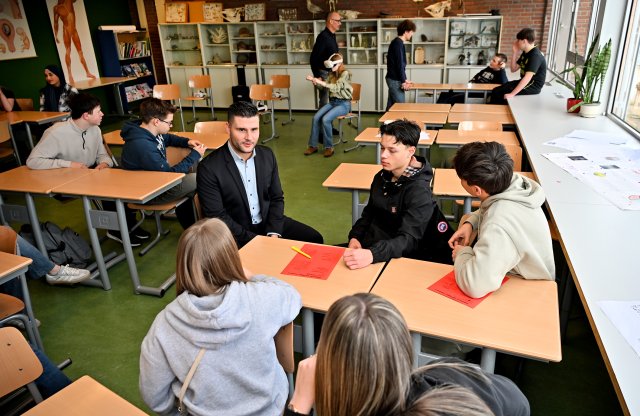
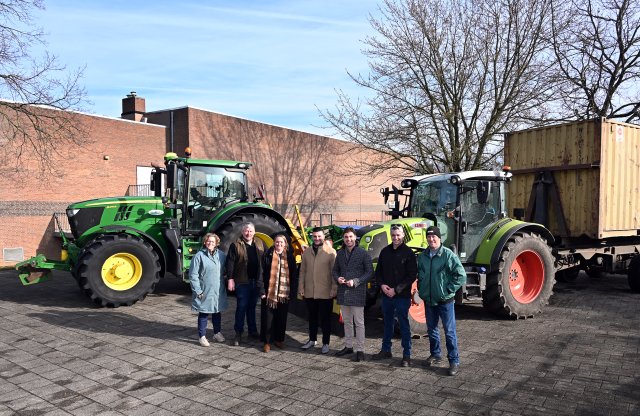
Last week, Alderman Vinken (Mobility) visited two educational traffic projects being carried out at Beroepscollege Parkstad Limburg Holz in Kerkrade. Both projects focus on traffic safety, but each does so in its own way. The Alderman with students, teachers, and supervisors of the traffic education programs and gained a good understanding of how valuable these lessons are for young people.
Alderman : "Young people are daily participants in traffic. Projects like this help them to recognize risks and make sensible choices. The combination of practice, experience, and awareness has a positive effect on the students. The skills they develop now form a valuable foundation for later life."
‘Goed Gezien’ focused on agriculture and traffic
In the morning, the focus was on the Goed Gezien (Well Seen) project. The lessons revolve around agricultural vehicles in traffic. Students learn how farmers work, how food is produced, and what role agricultural vehicles play in traffic.
During an interactive theory lesson, educational farmers from Boerderij Educatie Limburg talk about agriculture, food production, and the daily practices of farmers. Afterward, the students go outside for a practical lesson with real agricultural vehicles. Among other things, they experience:
- how the blind spot works
- what the turning circle of large vehicles means
- how to safely make contact with a driver
- Why agricultural vehicles require extra space and attention
The lessons increase mutual understanding between farmers and other road users, and help young people to move around more safely in traffic.
‘Go Safe without influence’ focused on traffic participation and substance use
In the afternoon, the students took part in the Go Safe Without Influence project, which focuses on the dangers of alcohol, drugs, and nitrous oxide in traffic. Using VR glasses, young people experience how their perception, responsiveness, and coordination change under the influence of substances.
The program consists of three lessons:
- Theory - explanation of how substances work and their risks.
- Practical application with VR – students experience three scenarios: alcohol, drugs, and nitrous oxide.
- Reflection – students discuss their experiences and reflect on their own choices and peer pressure.
The aim of this education is to make young people more aware of their behavior and better able to make safe choices, both for themselves and for others.